The Vietnamese Lunar New Year (Tết) is more than just a holiday; it’s the spiritual heartbeat of Vietnam. It marks a profound emotional reset as millions of Vietnamese return home to reconnect with their families and ancestors.
Understanding Tết traditions means discovering the soul of Vietnam through its most sacred rituals. From family reunions to honoring ancestors, Vietnamese Lunar New Year is a celebration of culture, family, and spiritual renewal.
Dive deeper into Vietnamese Culture? Explore more of our blogs on The Nest Asia today!
Origins and Cultural Foundations of Tết
Tết is rooted in the Vietnamese Lunar New Year and Vietnam’s wet-rice civilization. Historically, it marked the pause between harvest and planting, a sacred interval for rest and renewal. This timing reflects humanity’s dependence on nature, reinforcing gratitude toward both the earth and ancestral spirits who protect the household during Tet holiday.
Culturally, Tết traditions blend three belief systems. Confucianism defines hierarchy and filial duty, Buddhism contributes karma and compassion, encouraging moral reflection, while folk beliefs address luck and protection. These beliefs are expressed through rituals, symbolic foods like Vietnamese Lunar New Year food, and objects meant to guard the home from misfortune during the Tet Vietnam.
Preparing for a Fresh Beginning
Preparation for Vietnamese Lunar New Year is considered just as important as the celebration itself. Vietnamese beliefs hold that the quality of your preparation directly influences the quality of the year ahead. A clean, organized, and harmonious start is essential for attracting luck and prosperity in the coming year. This is why many focus on activities in Tết holiday preparations, from cleaning and decorating the home to preparing symbolic Vietnamese New Year food and ensuring the family is ready for the Tet celebration.
Cleaning the Home: Sweeping Away the Old
Every household engages in a deep cleaning ritual to remove stagnant energy. However, timing is everything. You must finish all cleaning before Giao Thua (Midnight). This is a physical manifestation of a spiritual desire: to scrub away the misfortunes of the past and prepare a pristine vessel for new blessings.
Shopping, Flowers, and Visual Symbols of Tết
The markets explode with color during this time. Buying new clothes is mandatory, symbolizing a fresh persona. However, the most visible sign of the approaching Vietnamese Lunar New Year is the presence of flowers.
Flowers during Tết are chosen for their symbolic meaning, not just aesthetics. The colors, shapes, and blooming cycles of these flowers represent moral qualities, prosperity, and protection for the Vietnamese Lunar New Year. Their placement near entrances or ancestral altars amplifies their symbolic power, ensuring good fortune and harmony throughout the year.
| Flower Name | Symbolism |
| Peach blossom (North) | Renewal, protection, youth |
| Yellow apricot (South) | Wealth, nobility |
| Kumquat tree | Fertility, continuity |
| Chrysanthemum | Longevity, filial piety |
| Orchid | Elegance, success |
| Marigold | Respect for ancestors |
Aside from Peach Blossoms and Kumquats, a unique tradition involves “Calligraphy Watermelons.” People buy large, round watermelons and hire calligraphers to paint wishes like “Phúc” (Happiness) or “Tài” (Wealth) directly onto the fruit’s skin. These fruits serve as edible art pieces that bring good omens to the family altar.
Read Related: Ancestor Worship in Vietnam: A Bridge Between the Living and the Past
Mâm Ngũ Quã: The Five Fruit Tray
The mâm ngũ quả is a central ancestral offering symbolizing harmony between heaven, earth, and humanity. While the number five represents the five elements (Metal, Wood, Water, Fire, Earth), the selection of fruit reveals a fascinating regional divide in psychology.
The difference between North and South is stark when you look at their altars.
- The North: A typical tray includes a hand of green bananas (acting as a base to hold everything), pomelos, peaches, persimmons, and mandarins. The focus is on color harmony and tradition.
- The South: The South chooses fruit based on the phonetic sound of its names. A popular arrangement is “Cầu-Dừa-Đủ-Xài” (Sugar Apple, Coconut, Papaya, Mango). When pronounced, this sounds like “Praying for enough money to spend.”
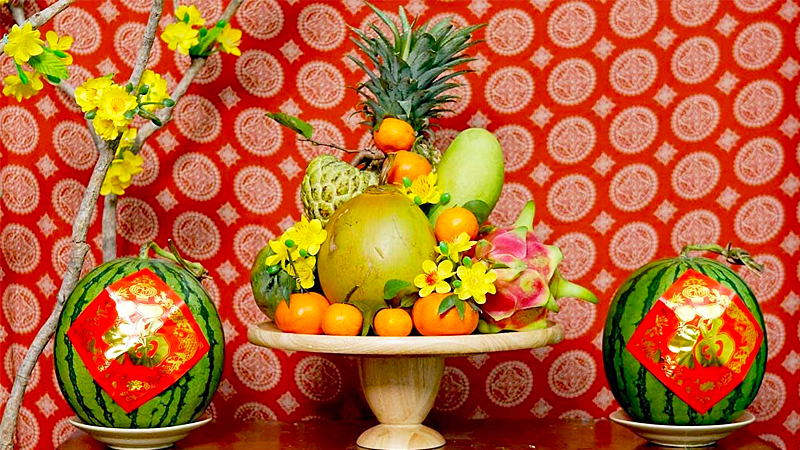
Southerners often avoid bananas because the word Chuối sounds like chúi (to slip or fail), whereas Northerners see the banana hand as a protective symbol holding the family together.
Traditional Food
Food reflects climate, agriculture, and worldview. Northern cuisine emphasizes preservation and balance, while southern dishes focus on abundance and sweetness, reflecting regional psychology toward prosperity.
| Region | Key Dishes | Symbolic Meaning |
| North | Bánh Chưng, Thịt Đông (jellied meat), dưa hành (pickles) | Earth–sky harmony, endurance |
| South | Bánh tét, Thịt Kho Trứng (braised pork and eggs), Canh Khổ Qua (bitter melon soup) | Fulfillment, overcoming hardship |
The Canh Khổ Qua is a pun. Khổ means suffering, and Qua means to pass. Eating this soup symbolizes swallowing the bitterness of the past year so that it may pass, allowing for a sweet new beginning.
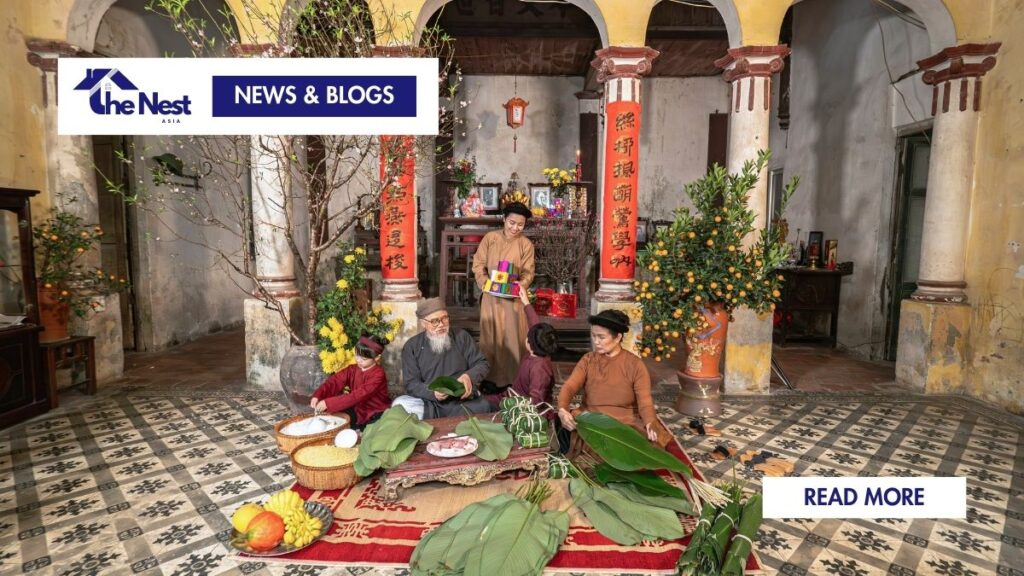
The process of making these dishes is a powerful bonding ritual. During this time, three generations sit around the kitchen, sharing stories and keeping the fire alive. This communal act weaves the family unit tighter, bridging the gap between old and young.
Sweets and Snacks for Hospitality
Every home prepares a tray of Mứt Tết (candied fruits) and roasted seeds. The sweetness of the candied fruits symbolizes a wish for a sweet year, while the red color of watermelon seeds represents luck. Offering these to guests is a way of sharing hope and joy.
Common traditional sweets for Tết:
- Coconut Jam: Crystalized bite-sized coconut strips.
- Ginger Candy: Spicy and warm sweets served with tea.
- Sesame Candy: Peanuts and sesame seeds bound with a sweet syrup.
- Mung Bean Cake: Crumbly, sweet cake symbolizing luck and fortune.
- Watermelon & Sunflower Seeds: Roasted and salted seeds.
Food Taboos
While there is a feast of traditional foods, there is also a strict list of foods to avoid during the first days of the year to prevent bad luck. Vietnamese people are very superstitious about the symbolism of their meals.
| Food Item | Why It Is Avoided | The Meaning |
| Squid (Same word as “ink” in Vietnamese) | “Đen như mực” (As black as ink) | Avoids a dark and unlucky year |
| Duck | Separation and scattering | Ducks flock together but scatter easily; symbolizes family separation. |
| Shrimp | Swimming backwards | Symbolizes one’s career or life going backward instead of forward. |
| Orange | “Quýt làm cam chịu” | An idiom means “To suffer for someone else’s mistakes.” |
The Return of Ông Táo (Kitchen Gods) and Pre-Tết Rituals
Spiritual preparation begins weeks before New Year’s Eve. The period before Tết is often busier than the holiday itself, as families rush to close the old year properly. The most important pre-Tết ritual is sending off the Kitchen Gods, who govern domestic harmony and moral conduct.
The Kitchen Gods’ Farewell
On the 23rd day of the last lunar month, families conduct a ritual to send Ong Tao (The Kitchen Gods) back to heaven. It is believed these gods ride golden carp to report the family’s affairs to the Jade Emperor. Families release live carp into rivers or lakes as “transportation” for the gods, symbolizing the liberation of living beings.
Cây Nêu: The Spiritual Defense
Often forgotten in modern cities but vital in rural areas is the Cay Neu. This is a tall bamboo pole erected in front of the house on the 23rd of the last lunar month. It is decorated with red paper, bells, and wind chimes. Its purpose is spiritual defense; the noise of the chimes and the red color act as a barrier to ward off evil spirits.
The Táo Quân Show
In Northern Vietnam, the night of New Year’s Eve is incomplete without watching Gặp Nhau Cuối Năm (Year-End Gathering), commonly known as the Táo Quân show. This is a comedy skit broadcast on national television where actors playing the Kitchen Gods satirically report on the country’s social and economic issues of the past year.
Midnight Offering
The most important ritual is Cúng Giao Thừa. At the stroke of midnight, families set up two altars: one indoors for ancestors and one outdoors for the heavens. The outdoor offering is to farewell the old administrative god of the year and welcome the new one, ensuring a peaceful transition of power in the spiritual realm.
Fireworks and Temple Visits
Immediately after the midnight rituals, the mood turns festive. In big cities, people gather at major landmarks to watch the fireworks display. It is a moment of communal celebration where the quiet prayers of the home meet the public joy of the streets.
Many Vietnamese, regardless of being Buddhist or Catholic, go to the pagoda or church immediately after midnight. They pray for peace and safety, often bringing home a small branch or salt as a symbol of luck. This first trip of the year sets a tone of spiritual mindfulness.
Activities in Tet Holiday
The First Days of Tết
The first three days follow a strict moral hierarchy rooted in Confucian gratitude. This schedule is not random; it ensures that every important relationship in a person’s life is honored in the correct order.
The schedule typically follows this rhyme: “Mùng 1 tết cha, Mùng 2 tết mẹ, Mùng 3 tết thầy.”
- Day 1: Visit your father’s side.
- Day 2: Visit your mother’s side.
- Day 3: Visit your teachers.
This specific order of visitation reflects the profound Vietnamese philosophy of “tôn sư trọng đạo” (respect for teachers) and “coi trọng tình nghĩa” (valuing emotional bonds), placing gratitude at the center of social life.
Lucky Money
Lì xì (lucky money) is a cherished Vietnamese tradition where new money in red envelopes is given to children and elders as a wish for good luck, health, and prosperity in the new year, with the focus on sincere goodwill rather than monetary value.
Games and Communal Joy
After the rituals, the streets fill with communal joy and unique entertainment. This is the time when the discipline of the first few days gives way to relaxation and fun.
Lô Tô
In Southern Vietnam, Lô Tô is legendary. It is similar to Bingo but accompanied by singing. One player would singtraditional songs to announce the numbers for the other players. The first one got all the numbers in their sheet wins. It is a vibrant, inclusive, and noisy activity that defines the Tet atmosphere in the countryside.
Play Cards
Playing cards is popular during the Tết holiday, often for fun and luck. Because gambling is illegal, the players often bet on sweets, soft drinks, and punishments like push-ups and sit-ups.
Common card games are: “Tiến lên” (Ladder/Up and Down), “Phỏm” (Joker), and “Bầu Cua Cá Cọp” (Gourd Crab Fish Tiger).
Ethnic Minority Festivals
Vietnam is home to 54 ethnic groups, and they have unique celebrations.
Some traditional activities:
- Hmong People: Ném Bao (throwing cloth balls).
- Thai People: Múa Xòe (Xòe dancing and bamboo pole dancing).
- Gie Trieng People: Their Tết is known as “Charcoal”; young men would burn trees for charcoal.
Working During Tet – Vietnam Labor Code 2019
While Tết is traditionally a time of rest and reunion, many workers in essential services, manufacturing, hospitality, and retail continue working through the holidays. To protect workers’ rights, Vietnam Labor Law sets strict compensation rules for working on public holidays, including Tết.
According to Article 98 of the 2019 Labor Code, employees who work during public holidays and Tết are entitled to significantly higher pay. These rates are mandatory and apply regardless of industry, unless more favorable terms are stated in the labor contract.
| Working Time | Minimum Pay Entitlement | Legal Explanation |
| Daytime work | At least 400% salary | 300% holiday pay + 100% normal daily wage |
| Night work | At least 490% salary | 300% holiday pay + 100% wage + 30% night-work bonus + 20% overtime-at-night bonus |
These rates reflect the law’s recognition that working during Tết means sacrificing family time and spiritual rituals, which carry exceptional cultural importance in Vietnam.
Read More: Vietnam Labor Law: Recruitment, Labor Law and Employment Law, and Contract Types
Tết: The Soul of Vietnamese Culture
Ultimately, Tết, the Vietnamese Lunar New Year, is more than just a celebration; it is the very identity of the Vietnamese people. It serves as a recurring reminder that, no matter how modern Vietnam becomes, the roots of family and ancestry remain at the heart of Vietnamese New Year traditions, acting as the gravity that holds life and society together.
About Us
The Nest Asia is a one-stop resource offering comprehensive information, practical relocation advice, cultural insights, valuable connections, and trusted services to help expatriates living in Vietnam navigate the transition, overcome challenges, and build a fulfilling life abroad. Starting your journey in a new country can often feel overwhelming. The Nest Asia is your trusted partner – we’re here to simplify that process and ultimately make Vietnam feel like home for you and your loved ones.
Discover more insightful blogs from The Nest Asia here!
Schedule a Meeting
Disclaimer: The Nest Asia is not an authorized provider of official government or non-government services. The information provided is intended for general guidance only. While we strive to offer accurate and timely information, we make no representations or warranties regarding its completeness or accuracy.