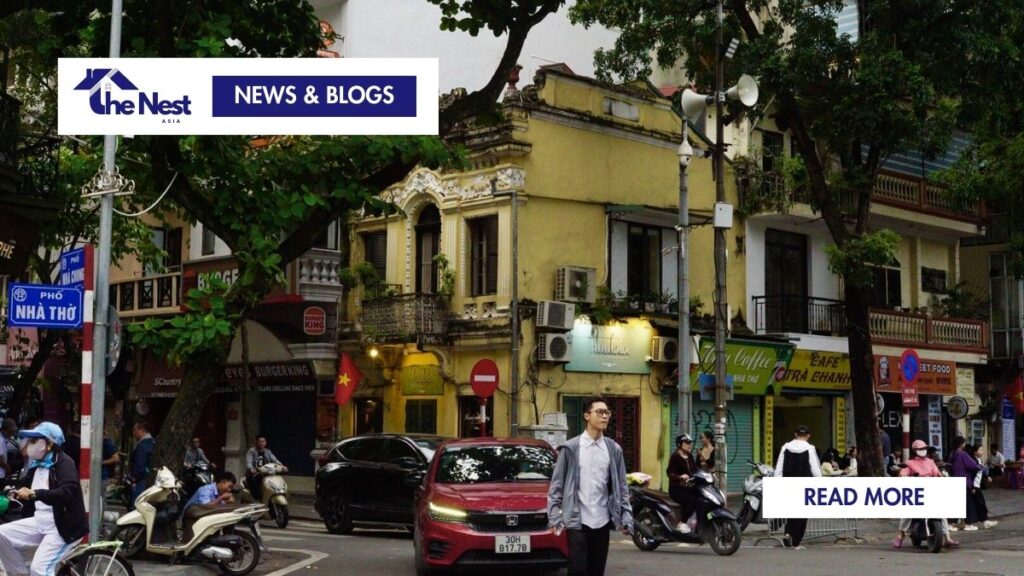
To newcomers, Vietnam traffic in Hanoi or Ho Chi Minh City can feel overwhelming. The streets appear chaotic, with dense flows of motorbikes, constant honking, and traffic problems that seem to ignore familiar traffic rules and traffic laws.
Yet beneath the surface, traffic in Vietnam follows a shared, unspoken logic. This so-called “organized chaos” reflects how Vietnamese people adapt, negotiate space, and keep moving forward—mirroring the rhythm of daily life in a fast-developing economy.
Social Architecture of the Road
Hierarchy and Collective Flow
The physical layout of Vietnam traffic acts as a real-time map of the country’s social structure. Unlike the isolated “metal boxes” of Western car culture, traffic in Vietnam is a deeply communal experience. The constant density on the roads reflects two core pillars of society: reduced personal space and an ingrained respect for hierarchy that quietly shapes how people move and yield.
In many Western cities, frustration or “road rage” often stems from violations of personal space or strict traffic rules. In contrast, traffic in Vietnam operates with minimal reliance on formal traffic laws and more on shared awareness. Motorbikes travel inches apart—sometimes close enough for knees to touch—yet aggression is rare. Instead, flow is maintained through eye contact, anticipation, and mutual adjustment.
This dynamic mirrors Vietnam’s high-context culture, where multi-generational living and collective responsibility are the norm. Comfort with proximity allows society to function despite density, and the same logic applies on the road. In Vietnam traffic, as in daily life, the individual moves as part of a larger, constantly adapting collective.
The Unspoken Law of Size
While Vietnam traffic may appear egalitarian at first glance, it is quietly governed by an unspoken “law of the large.” Trucks and buses dominate the center of the road, followed by cars, then motorbikes. This hierarchy goes beyond physics or informal traffic rules—it reflects Confucian values of seniority, order, and social status embedded in daily life.
The same logic applies off the road. In a Vietnamese office, the “big truck” (the director) sets the direction, while the “motorbikes” (staff) adapt their movement around that authority. No one expects the truck to stop for the bike; instead, the bike finds the safest path forward. In traffic in Vietnam, as in the workplace, this acceptance of hierarchy allows flow to continue and prevents total gridlock despite minimal reliance on formal traffic laws.
Read Related: Ancestor Worship in Vietnam: A Bridge Between the Living and the Past
What Outsiders Often Get Wrong About Vietnam Traffic?
For many first-time visitors, Vietnam traffic chaos feels like a warning sign. The lack of clear lanes, constant movement, and minimal use of signals is often interpreted as disorder or danger. From the outside, it seems that rules simply do not exist.
In Vietnam, the system is not built around rigid enforcement but around shared awareness. Instead of relying on signs and strict right-of-way rules, drivers read each other in real time through eye contact, body movement, and speed.
To someone unfamiliar with this logic, the streets feel unpredictable. To locals, they are highly legible. Once outsiders stop expecting Vietnam’s roads to behave like those in Paris or New York, the chaos begins to look less random and more intentional.
Read Related: How Vietnamese See Time: A Culture Guide for Foreign Professionals Relocated
Economic Agility and Pragmatism
The “Shortcut” as Innovation
If Vietnam traffic is a river, then the motorbike is its most adaptable vessel. In Vietnam, the motorbike is not just transportation but a living capital asset, reflecting the country’s fast-moving, entrepreneurial mindset. The flexible maneuvers seen daily on the road echo the spirit of “Chớp thời cơ”—seizing opportunity the moment it appears.
In Ho Chi Minh City, a rider faced with a blocked intersection may calmly move onto the sidewalk. To a Western observer, this may look like a violation of traffic laws or traffic rules; to a local, it is a practical response to traffic problems in Vietnam. The goal is not to break the system, but to keep moving when the system slows.
This logic mirrors the business environment. When formal processes become rigid or bureaucratic, Vietnamese entrepreneurs find workarounds. Much like navigating traffic in Vietnam, they adjust direction, identify open gaps, and maintain momentum.
The Multi-Tool Mentality
The physical adaptability of the vehicle itself is perhaps the most striking comparison. It is common to see a single scooter transporting an entire family of four or a delivery driver balancing crates. This is the “can-do” spirit in its most literal and visible form on the street.
It reflects a Vietnamese culture where people are not confined by the “official” description of their job titles. A teacher might run an online shop during breaks; a guard might manage real estate. Just as the motorbike is modified, the Vietnamese worker is inherently “multi-stack,” wearing several hats to maximize security.
Comparing Traffic and Business Logic
| Feature | Traffic/Street Logic | Business/Economic Logic |
| Movement | Fluid, water-like flow filling gaps. | Agile pivoting to new market opportunities. |
| Hierarchy | Big vehicles have right of way. | Seniority and top-down decision making. |
| Conflict | Resolved instantly with a nod. | Resilient recovery from failure; move on fast. |
| Planning | Focus on the next 2-3 meters. | Short-term adaptability over long-term rigidity. |
Read Related: Vietnamese Iced Coffee Culture: Why Vietnam Runs on Cà Phê Sữa Đá
Why Strict Rules Would Actually Break the System?
It is tempting to assume that Vietnam traffic problems could be solved by stricter rules, clearer lanes, and heavier enforcement. In reality, imposing a fully rigid, Western-style traffic system could easily make things worse.
Vietnam’s streets operate under extreme conditions: high population density, mixed vehicle types, narrow roads, and constant informal use of space. In such an environment, waiting for perfect compliance would create bottlenecks everywhere. A car that insists on its “right of way” or a rider who refuses to adjust would slow the entire flow.
The current system works because it is adaptive rather than rule-bound. Drivers negotiate space moment by moment, prioritizing movement over correctness. This flexibility allows traffic to keep flowing even when conditions change suddenly.
Rather than asking “Who is right?”, the street asks a more practical question: “How do we all get through?” In that sense, Vietnam traffic chaos is less a failure of discipline and more an example of how informal coordination can outperform strict structure when the environment demands it.
Read Related: The Language of Respect in Vietnam: Why One Word Matters A Lot
Psychological Resilience and the “Now”
Constant Forward Motion
To drive in Vietnam traffic chaos is to engage in a constant exercise of mindfulness. The psychological state required to navigate a busy intersection is similar to the mindset that allowed the Vietnamese people to thrive. The most important rule for a rider is to never stop unexpectedly.
Safety is found in predictable, steady movement forward. If a driver hesitates mid-stream, the entire system behind them falters. This “Steady Forward” mindset is the pulse of the economy. Having transitioned from a war-torn nation to a powerhouse, there is a cultural consensus that “stopping is failing.”
This manifests as a relentless work ethic and a focus on incremental progress. Even when the “traffic” of global markets becomes difficult, the Vietnamese approach is to keep the wheels turning. They trust that the collective flow will eventually carry them through the congestion to their destination.
The Resilience of the Bumper-Tap
Minor collisions are a daily occurrence on Vietnamese roads, yet they rarely cause drama. In many cultures, a scrape results in a halt and an argument. In Vietnam, the common response is a quick nod of acknowledgement and an immediate return to the traffic flow.
There is an inherent understanding that time is the most valuable resource available. Dwelling on minor setbacks is viewed as counterproductive. This psychological resilience is a hallmark of the Vietnamese character. Whether facing a business failure or a personal hurdle, they move on.
Read Related: Freetime Activities in Vietnam’s Big Cities: From Pickleball Courts to the Best Coffee Shops Near You
Wisdom of the Flow
Fluidity over Formality
Ultimately, the driving style in Vietnam is not an absence of logic, but the presence of a different logic: Pragmatic Efficiency. Success on the road is reserved for those who can see the opening first. They must have the courage to flow into it without any hesitation.
The Vietnamese way of driving is a physical manifestation of a culture that values flexibility over rigidity. By observing the streets, we see a nation that does not wait for perfect conditions. Instead, they create their own path through the gaps, ensuring they always reach their goals.
Key Takeaways for Observers
- Be like water: Adapt to the environment rather than forcing the environment to adapt to you.
- Respect the Flow: Understand that collective momentum is often more powerful than individual rights.
- Keep Moving: Hesitation causes accidents; steady, predictable progress ensures safety and success.
- Signal Your Intent: Use “nudges” (like the horn) to communicate presence, not aggression.
As Vietnam continues its rapid ascent on the global stage, its ability to navigate Vietnam traffic chaos remains a competitive advantage. It shows the world that sometimes, the most efficient way to move forward is not a straight line. The best way is to simply join the flow.
Read Related: Is Tipping in Vietnam Mandatory? The Ultimate Traveler’s Guide
About Us
The Nest Asia is a one-stop resource offering comprehensive information, practical relocation advice, cultural insights, valuable connections, and trusted services to help expatriates living in Vietnam navigate the transition, overcome challenges, and build a fulfilling life abroad. Starting your journey in a new country can often feel overwhelming. The Nest Asia is your trusted partner – we’re here to simplify that process and ultimately make Vietnam feel like home for you and your loved ones.
Discover more insightful blogs from The Nest Asia here!
Schedule a Meeting
Disclaimer: The Nest Asia is not an authorized provider of official government or non-government services. The information provided is intended for general guidance only. While we strive to offer accurate and timely information, we make no representations or warranties regarding its completeness or accuracy.