Ancestor worship in Vietnam profoundly shapes family life, moral values, and national identity. This practice links generations through rituals of remembrance, gratitude, and spiritual continuity, serving as a vital bridge that persists from ancient times into modern Vietnamese society.
What is Ancestor Worship in Vietnam?
To understand Vietnamese culture, one must first understand Ancestor Worship in Vietnam. It is the bedrock of the Vietnamese spiritual worldview, influencing everything from architecture to daily schedules.
Beyond Religion: A Way of Life
It is a common misconception to categorize this practice strictly as a religion. Unlike organized religions with strict dogmas or centralized scriptures, ancestor worship is a moral and cultural system embedded deeply in daily life. It operates on the premise that death does not sever the bond between family members.
For the Vietnamese, the deceased are not “gone” in the Western sense. They remain present, silent observers of the family’s fortunes and misfortunes. Consequently, caring for ancestors is not a supernatural obligation but a continuation of the care one would provide to living parents or grandparents.
Core Beliefs Behind Ancestor Veneration
The practice rests on three fundamental pillars that have sustained it for thousands of years:
| Core Belief | Meaning | Cultural Implication |
| The Soul Continues | The soul is believed to exist in a parallel spiritual realm and remain aware of the living world. | Death does not end family bonds; ancestors remain present members of the household. |
| Protection and Guidance | Ancestors are viewed as invisible guardians who influence fortune, health, and harmony. | Families pray for support during hardship and give thanks during success. |
| Filial Piety | Respect for parents extends beyond death and becomes a lifelong moral obligation. | Ritual remembrance is an ethical duty, not merely a religious act. |
Historical Roots of Vietnamese Ancestor Worship
The reverence for ancestors is not a recent development; it is as old as the Vietnamese people themselves. Over centuries, Ancestor Worship in Vietnam has absorbed influences from various philosophies while retaining its indigenous core.
Indigenous Beliefs Before Confucianism
Long before foreign philosophies arrived, ancient Vietnamese people practiced spiritual animism. They believed that everything possessed a soul. Within this worldview, the spirits of the deceased were accorded special reverence.
Early agricultural communities relied heavily on the cycles of nature and the accumulated wisdom of elders. Worshipping ancestors was a way to honor the lineage that passed down the knowledge of rice farming and survival.
Confucian Influence and Family Hierarchy
When Confucianism entered Vietnam, it formalized the rituals. A strict hierarchy was introduced, dictating who could worship whom and establishing the patriarchal lineage.
Confucianism transformed a folk belief into a structured system of social order, emphasizing that a stable state is built upon stable families, which are anchored by ancestor worship.
The Role of Buddhism and Taoism
Vietnamese spirituality is often described as “Tam Giáo Đồng Nguyên” (Three Teachings, One Source).
Buddhism softened the rigid hierarchy of Confucianism with compassion, introducing concepts of karma, reincarnation, and rites that help souls transcend suffering.
Taoism contributed mystical elements, including geomancy (feng shui) for grave placement and paper votive offerings (vàng mã) to symbolically send material goods to the spirit world.
The Family Altar: The Spiritual Heart of the Home
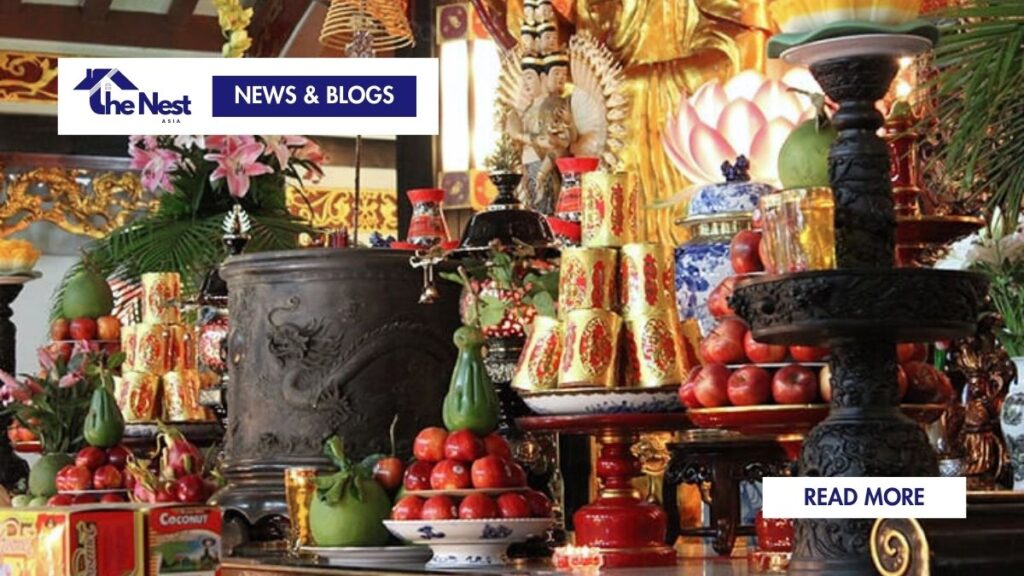
If you walk into a traditional Vietnamese home, the first thing you will likely see is the altar. It is not hidden away; it occupies the most solemn and central position in the house, symbolizing the continuing presence of the ancestors.
What You Will Find on a Vietnamese Ancestor Altar
The altar is arranged with precision. Every item acts as a communication tool between the two worlds.
| Item | Symbolism & Purpose |
| Photos | Represents the physical presence of the deceased. Placed hierarchically (highest generation at the top/center). |
| Incense Bowl | The “communication portal.” Lighting incense is the act of opening the line to the ancestors. |
| Fruit Tray | Five fruits representing the five elements (Metal, Wood, Water, Fire, Earth) and the wish for prosperity. |
| Flower | Fresh flowers signify purity and beauty. Commonly used flowers include chrysanthemums or lotuses. |
| Red Candles/Lamps | Represent the sun and moon (Yin and Yang), lighting the way for spirits to return. |
| Water and Wine Cups | Essential offerings representing life and sustenance. |
Daily and Occasional Rituals
Worship is not reserved for special days; it is a daily rhythm.
Every morning or evening, a family member (often the matriarch or eldest male) lights incense and bows. This simple act invites the ancestors to share in the day’s activities.
Before starting a long trip, taking an exam, or welcoming a new family member, incense is lit to report the news (báo cáo) to the ancestors, asking for their blessing and protection.
Ancestor Worship in Major Vietnamese Festivals
The practice of Ancestor Worship in Vietnam reaches its peak during major cultural festivals. These are the times when the barrier between the living and the dead is believed to be thinnest.
Tết (Lunar New Year): Welcoming Ancestors Home
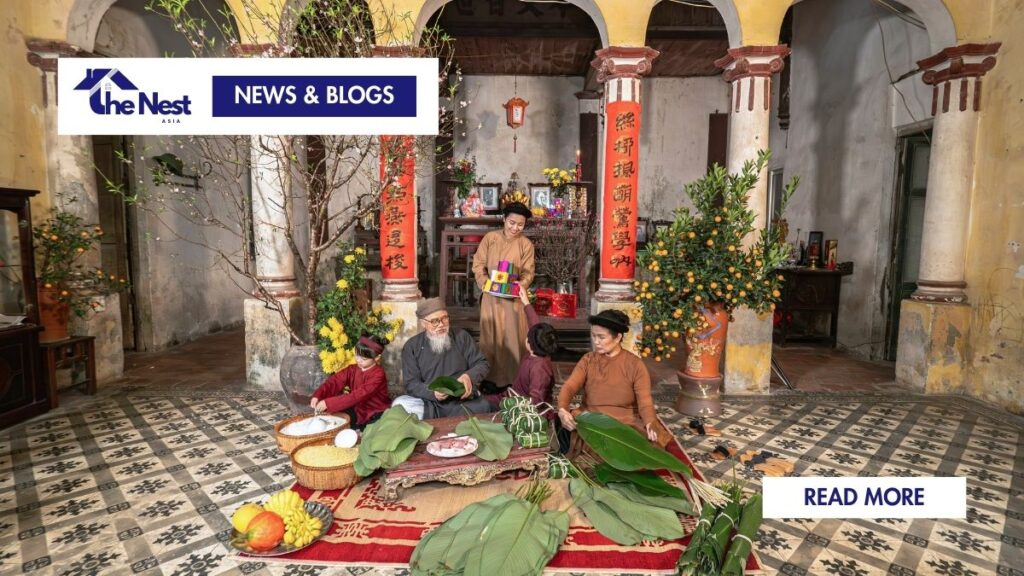
Tết is not just a New Year celebration; it is a spiritual reunion. Days before Tết, families visit gravesites to clean them (Tảo Mộ) and invite ancestors home for the holidays.
During the three days of Tết, food offerings are made before every meal. The atmosphere is one of joy and inclusivity, confirming the core belief of no one is left behind, not even the dead.
Đám Giỗ (Ancestral Anniversary): Remembering Lineage
In Vietnam, a person’s death anniversary (Ngày Giỗ) is often more significant than their birthday. A birthday celebrates the individual, but the Giỗ celebrates their role in the lineage.
Families prepare a feast featuring the deceased’s favorite dishes as a symbolic act of remembrance. The family members then gather to offer incense and share memories, reinforcing family bonds and reminding younger generations of their ancestral roots.
Lễ Vu Lan (Vu Lan Festival): Gratitude and Filial Piety
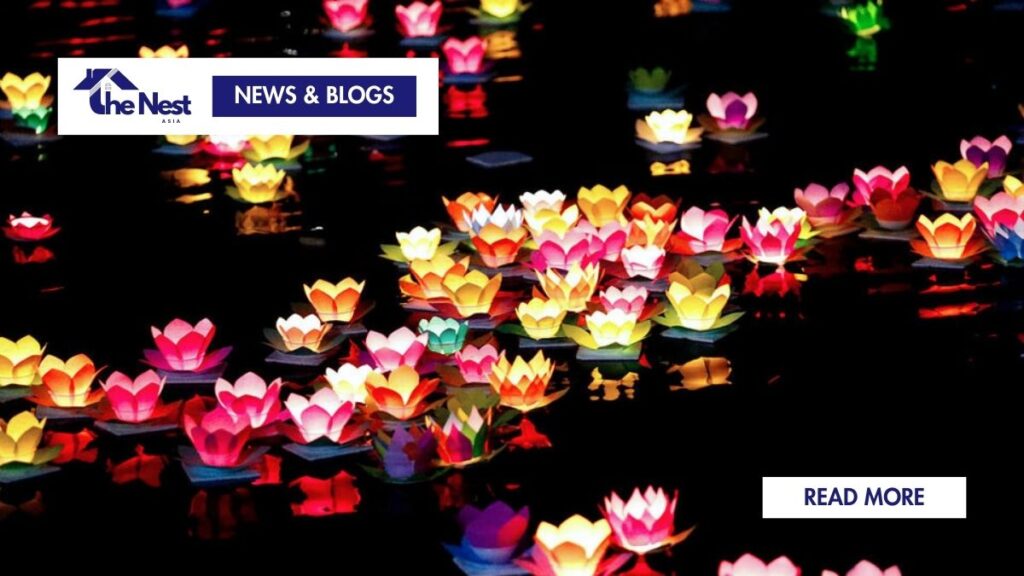
Held in the 7th lunar month, Vu Lan is the season of “Wandering Souls” and filial piety. It is akin to Mother’s Day and Father’s Day combined, but with a spiritual dimension.
People visit pagodas to pray for the peace of their parents’ souls and wear roses on their chests, red roses for those with living mothers, white for those whose mothers have passed.
For a full calendar of these spiritual events, check out our guide to Top Festival in Vietnam.
Social and Moral Meaning of Ancestor Worship
Why has this practice survived modernization? Because it serves functions that go far beyond the spiritual.
Filial Piety as a Social Glue
Ancestor worship instills a profound sense of accountability. A person is less likely to commit a crime or act immorally if they believe it will bring shame to their ancestors. It creates a moral compass, guiding behavior through the lens of family honor rather than just legal consequence.
Maintaining Family Identity Across Generations
In a rapidly changing world, the family altar is a constant. It acts as the family’s archive. Through oral stories told during rituals, children learn about their great-grandparents’ struggles and triumphs. This fosters a strong sense of identity and belonging, combating the isolation often felt in modern societies.
Community, Not Individualism
The West often prizes individualism. Vietnamese culture, anchored by ancestor worship, emphasizes the collective. This perspective fosters humility. It reminds individuals that their success is not solely their own but the result of the sacrifices made by previous generations.
Ancestor Worship in Modern Vietnam
As Vietnam modernizes, the skyline changes, but the altars remain. However, the practice is adapting to the constraints of contemporary life.
Urban Life and Changing Ritual Practices
In the high-rise apartments of Hanoi or Ho Chi Minh City, space is a luxury. Large, elaborate wooden altars are often replaced by wall-mounted shelves. The complex rituals of the past are simplified to fit busy work schedules. Yet, the essence remains: the incense is still lit, and the water is still changed daily.
Young Generations: Tradition Vs. Modernity
Young Vietnamese are negotiating tradition within modern life rather than abandoning it. While many may no longer memorize prayers or follow rituals rigidly, respect for ancestors remains intact.
For younger generations, ancestor worship is increasingly understood less as a spiritual obligation and more as a cultural practice that preserves family identity and continuity.
Ancestor Worship Among Overseas Vietnamese
For the millions of Vietnamese living abroad, Ancestor Worship in Vietnam transforms into “Ancestor Worship within the Diaspora.” The altar becomes a powerful anchor to the homeland.
It helps parents teach their children about their roots, bridging the cultural gap between a child born in California or Paris and their ancestors in the Mekong Delta.
Common Misunderstandings About Ancestor Worship
For international visitors, this practice can be confusing. It is crucial to dispel common myths to appreciate the depth of the tradition.
Is It Idol Worship?
The Vietnamese do not worship ancestors as gods who possess divine power to create or destroy. They do not “worship” in the sense of submission to a deity. Instead, they “venerate.”
It is an act of deep respect and remembrance, similar to laying flowers at a grave in Western culture, but performed daily and with greater intensity.
Is It Supersitions?
While there are superstitious elements (like burning paper money), dismissing the entire practice as superstition misses the point. It is primarily an ethical and emotional practice.
It enables individuals to process grief, maintain memories, and express gratitude. It is a psychological mechanism for coping with loss as much as it is a spiritual belief.
Why Ancestor Worship Still Matters Today?
In a world obsessed with the future, Ancestor Worship in Vietnam offers a grounding perspective. It reminds us that we are part of a continuum. It remains a vital bridge, connecting memory to identity, ethics to everyday life, and individuals to a shared past.
In honoring their ancestors, Vietnamese families are not just looking back; they are reaffirming who they are and clarifying the values they wish to carry forward into the future.
About Us
The Nest Asia is a one-stop resource offering comprehensive information, practical relocation advice, cultural insights, valuable connections, and trusted services to help expatriates living in Vietnam navigate the transition, overcome challenges, and build a fulfilling life abroad. Starting your journey in a new country can often feel overwhelming. The Nest Asia is your trusted partner – we’re here to simplify that process and ultimately make Vietnam feel like home for you and your loved ones.
Discover more insightful blogs from The Nest Asia here!
Schedule a Meeting
Disclaimer: The Nest Asia is not an authorized provider of official government or non-government services. The information provided is intended for general guidance only. While we strive to offer accurate and timely information, we make no representations or warranties regarding its completeness or accuracy.