Falling in love with a Vietnamese partner means embracing a vibrant culture. A traditional Vietnamese wedding is more than just a ceremony — it’s a meaningful series of events that honor ancestors while celebrating the couple’s future happiness together.
Understanding the unique marriage customs in Vietnam is key to ensuring a smooth and joyful union. In this guide, we’ll walk you through what to expect, how to prepare, and the essential cultural nuances you need to navigate with respect and confidence.
The Legal First Step
Before the colorful ceremonies of a traditional Vietnamese wedding begin, you must attend to the administrative tasks. Obtaining a Vietnam marriage certificate takes time, so you must provide an affidavit of single status.
Key documents:
- Affidavit of single status: Proof that you are free to marry.
- Passport Copies: Certified and translated into Vietnamese.
- Mental Health Check: Required by some specific districts.
- Residence Proof: Confirmation of your temporary address in Vietnam.
Read More: Vietnam Marriage Certificate: How to Get It for Foreigners?
Evolution of Rituals in a Traditional Vietnamese Wedding
Historically, a traditional Vietnamese wedding involved six separate rituals:
- Proposal (Lễ dạm ngõ)
- Engagement (Lễ ăn hỏi)
- Gift Presentation (Lễ nạp tài)
- Bride-Asking (Lễ xin dâu)
- Procession (Lễ rước dâu – thành hôn)
- Post-Wedding Visit (Lễ lại mặt)
Modern life has streamlined this process significantly. Today, most couples focus on just three main ceremonies: The Proposal, Engagement, and Wedding. The other rituals are often combined or simplified to fit busy schedules.
Read Related: Work Permit Vietnam Agency: Requirements, Procedures, and Work Visa Services for Expats in Vietnam
The Engagement (Đám hỏi)
The engagement ceremony is a major event in a traditional Vietnamese wedding, often taking place weeks or months before the actual wedding day. This is when the groom’s family formally asks for the bride’s hand in marriage.
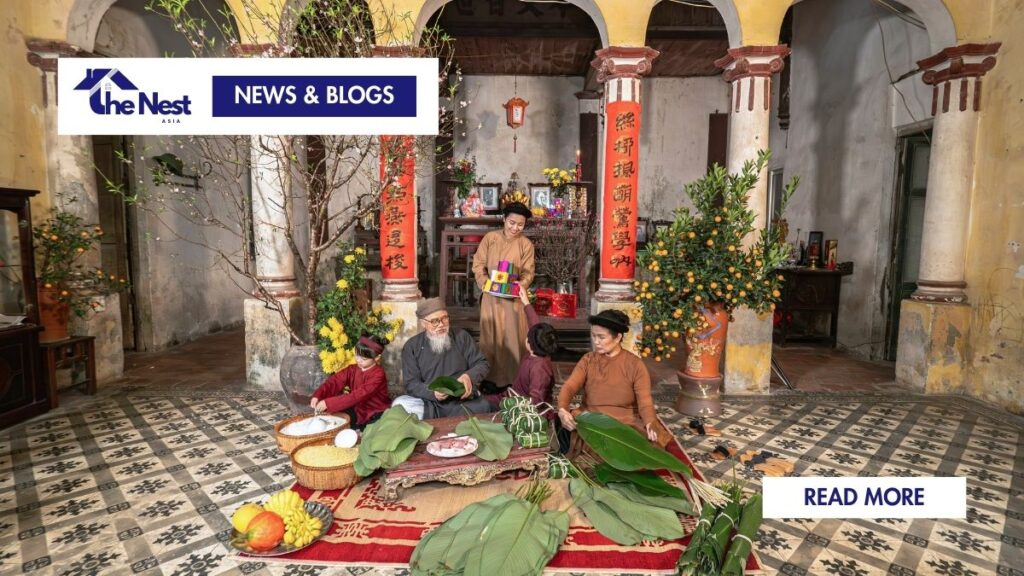
In line with marriage customs in Vietnam, the groom’s family presents specific gifts. These are carried in red lacquer trays covered with bright red cloth, and the number of items is always odd, typically five or seven, which symbolizes balance and harmony.
Symbolic items inside include:
- Betel Leaves & Areca Nuts (Trầu cau): A symbol of a faithful marriage.
- Husband & Wife Cake (Bánh phu thê): A sweet treat representing harmony between the couple.
- Roasted Pig: Represents abundance and prosperity for the couple’s future.
- Tea & Wine: Used to offer respect to the ancestors.
Read Related: Vietnam Permanent Residence Card: Requirements, Application, and Temporary Residence Address
Traditional Vietnamese Wedding Dress
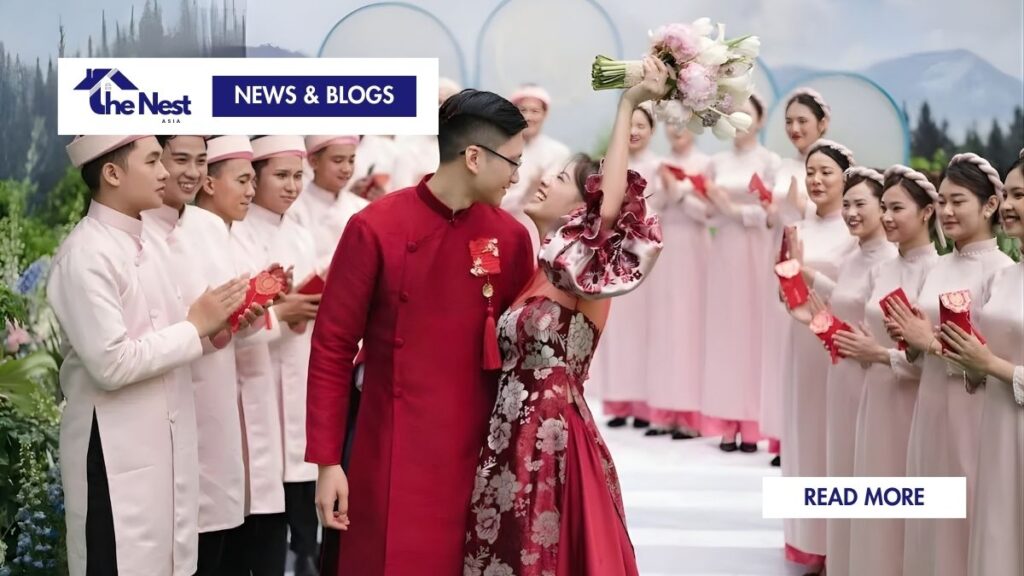
Visuals play a central role in a traditional Vietnamese wedding, and the attire holds deep cultural significance. The traditional Vietnamese wedding dress (Ao Dai) worn by the bride is typically in vibrant red or pink, symbolizing good fortune and prosperity. The groom usually wears a blue or gold Ao Dai, reflecting wealth and happiness.
Here’s a quick guide to the traditional Vietnamese wedding clothes expectations:
| The Wearer | Outfit | Typical color | Typical Accessories |
|---|---|---|---|
| Bride | Ao Dai | Red or pink | Khăn Đóng (Headpiece) |
| Groom | Ao Dai | Blue or gold | Matching headpiece |
| Mothers | Ao Dai | Velvet dark blue/red | Pear Necklace |
| Fathers | Ao Dai or suit | Black or grey | Tie |
In a traditional Vietnamese wedding, couples invest heavily in elaborate photoshoots, wearing multiple outfits at scenic locations to capture the essence of their union in timeless wedding albums.photography captures the couple in multiple outfits at scenic locations. It is a tiring but memorable experience.
Read Related: Vietnam Passport and Dual Citizenship for Children: Eligibility, Benefits, and Legal Procedures
Wedding Day: A Detailed Timeline
The traditional Vietnamese wedding is a marathon of emotions and rituals, each reflecting deep cultural significance and the rich marriage customs in Vietnam.
The Asking & Procession
The day begins with the groom’s family visiting the bride’s home. A representative enters first, carrying a tray of wine to ask for permission (Lễ Xin Dâu), marking the first step in marriage customs in Vietnam. Once granted, the groom enters to formally greet his bride and presents her with a bouquet, symbolizing their union.
The Ancestor & Tea Ceremony
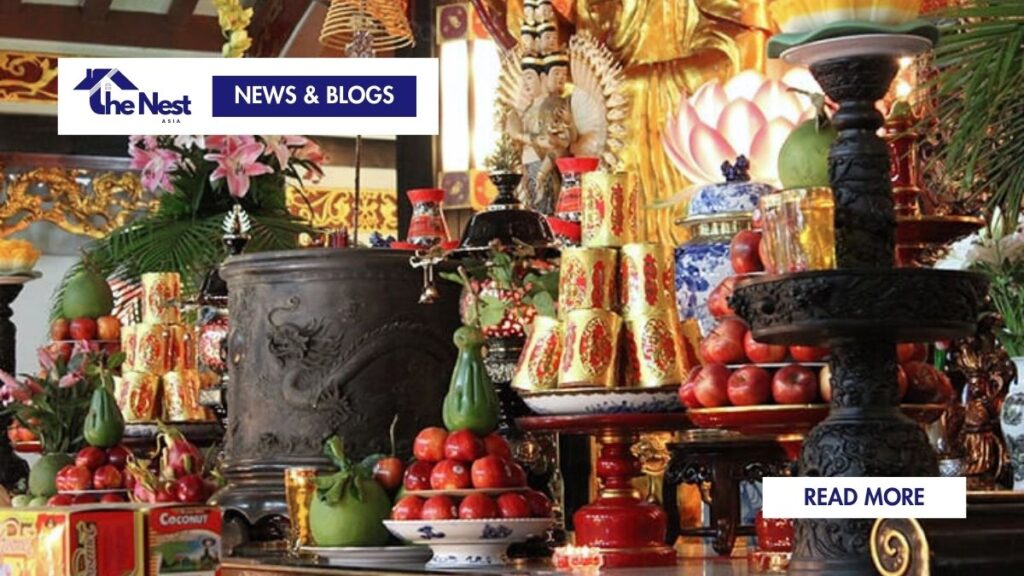
Next, the couple participates in a traditional ceremony, bowing three times with incense in hand to honor their ancestors, formally announcing their marriage. Following this, they serve tea to their parents and elders, receiving both advice and Vietnamese wedding traditions gifts, such as gold jewelry, as a gesture of accepting family blessings.
The Reception
The atmosphere shifts from solemn to celebratory. The couple changes into Western attire for the banquet and stands at the door to personally welcome guests. During the reception, they move from table to table, toasting friends and family, celebrating their new life together.
The Post-Wedding Visit
In keeping with marriage customs in Vietnam, the couple returns to the bride’s home several days after the wedding with gifts, such as rice or chicken, as a quiet gesture of thanks to the bride’s parents for raising her. This final ritual symbolizes gratitude and deepens the connection between the two families.
Read Related: Electronic Identification (eID) Accounts for Expats in Vietnam: Complete Before 1/7/2025
Practical Preparation Checklist
- Legal: Secure your affidavit of single status months ahead of time.
- Budget: Expect the average cost of a Vietnamese wedding to range from US$5,000 to over US$20,000.
- Attire: Schedule your Ao Dai fitting at least a month in advance. Renting a wedding gown is a cost-effective option.
- Speech: Learn a few basic Vietnamese phrases to greet your guests.
- Makeup: Book a professional makeup artist for your special day.
- Dates: Consult a fortune teller for an auspicious wedding date and time.
Conclusion
For the foreign partner, this guide ensures that you can confidently navigate the traditional Vietnamese wedding rituals, helping you foster a deep respect for your spouse’s ancestral culture and family traditions.
For the couple, understanding the wedding ceremonies will enable you to balance the logistical aspects with the cultural customs, ensuring that you select the right attire and prepare meaningful gifts for the ceremony.
For wedding organizers, this guide provides a structured timeline, allowing you to coordinate the wedding event smoothly, ensuring seamless execution of everything from the photography session to the reception.
FAQ
1. What documents are required for a Vietnam marriage certificate?
You generally need an affidavit of single status, certified passport copies, proof of residence, and sometimes a mental health check.
2. How have Vietnamese wedding rituals changed in modern times?
Historically there were six rituals, but modern couples typically streamline them into three main events: the Proposal (Dam Ngo), Engagement (An Hoi), and Wedding (Thanh Hon).
3. What gifts does the groom’s family bring to the engagement?
They bring an odd number of red lacquer trays (usually 5 or 7) containing symbolic items like betel leaves, areca nuts, tea, wine, and roasted pig.
4. What is the traditional attire for the bride and groom?
The bride wears a red Ao Dai with a headpiece (Khan Dong) for luck, while the groom wears a blue or gold traditional tunic.
5. What is the main difference between the morning ceremony and the reception?
The morning ceremony is solemn, spiritual, and for close family; the evening reception is a loud, large banquet for friends and extended networks.
6. What happens during the Tea Ceremony?
The couple bows to ancestors, offers tea to parents and elders to show respect, and receives advice and gold jewellery in return.
7. Do guests bring gifts to a Vietnamese wedding?
No, guests typically bring red envelopes containing cash (“lucky money”) instead of physical gifts to help cover reception costs.
8. When do couples take their wedding photos?
Couples usually spend a full day weeks before the event taking elaborate pre-wedding photos in multiple outfits to display at the reception.
9. What is the Le Lai Mat ritual in Vietnam?
It is a post-wedding visit, often days after the ceremony, where the couple returns to the bride’s home with gifts to thank her parents.
10. How should I prepare for the “door challenge”?
The groom should prepare cash budgets for the “challenge” where the bride’s family blocks the door until he proves his worth to enter.
About Us
The Nest Asia is a one-stop resource offering comprehensive information, practical relocation advice, cultural insights, valuable connections, and trusted services to help expatriates living in Vietnam navigate the transition, overcome challenges, and build a fulfilling life abroad. Starting your journey in a new country can often feel overwhelming. The Nest Asia is your trusted partner – we’re here to simplify that process and ultimately make Vietnam feel like home for you and your loved ones.
Discover more insightful blogs from The Nest Asia here!
Schedule a Meeting
Disclaimer: The Nest Asia is not an authorized provider of official government or non-government services. The information provided is intended for general guidance only. While we strive to offer accurate and timely information, we make no representations or warranties regarding its completeness or accuracy.