Introduction – What Religion Is Vietnam?
Vietnam religion reflects one of the most diverse and harmonious spiritual landscapes in Asia. Recognized by the Pew Forum Institute (USA) as one of 12 countries worldwide with a very high level of religious diversity, Vietnam stands as a truly multi-ethnic, multi-cultural, and multi-religious nation.
This diversity comes from the fusion of indigenous faiths — such as totemism, shamanism, and animism — with imported traditions like Buddhism in Vietnam, Catholicism in Vietnam, Protestantism, and Islam. The result is a vibrant mosaic where different beliefs coexist and influence one another without conflict.
As of 2022, the Vietnamese government officially recognizes 16 religions and 43 religious organizations, with over 26.5 million registered believers, more than 54,000 dignitaries, and nearly 30,000 places of worship nationwide. Beyond formal institutions, most Vietnamese still practice folk beliefs and ancestral worship, often identifying as “non-religious” but deeply spiritual.
Ultimately, Vietnam religion is less about doctrine and more about balance — a reflection of enduring Vietnamese values rooted in harmony, gratitude, and respect.
Discover how Vietnam religion shapes Vietnam culture? Explore more with The Nest Asia Now!
Main Religion in Vietnam: A Harmony of Many Beliefs
When it comes to Vietnam religion, there isn’t a single “main” faith that defines the country. Instead, Vietnam is home to a multi-belief system — a blend of folk beliefs, Buddhism, Confucianism, and Christianity that together shape everyday life and values.

According to the latest Vietnam religion percentage data, about 69.1% of Vietnamese people follow folk religions, rooted in ancestor worship, nature gods, and village deities. Buddhism represents 11.7%, Catholicism accounts for 6.9%, followed by Caodaism (2.7%), Protestantism (1.6%), Hoahaoism (1.4%), and Islam (0.1%). Around 5.2% of the population identifies as non-religious — yet spirituality still quietly influences their daily routines.
This cultural mosaic reflects one of the deepest Vietnamese values: tolerance and harmony. Rather than separating people, these diverse beliefs coexist — where it’s common for a Buddhist to light incense for ancestors, a Catholic to join in Lunar New Year prayers, or a family to honor both Vietnamese gods and saints.
Ultimately, one of Vietnamese traditions is a belief in balance — between past and present, faith and family, humans and nature. That’s what makes Vietnam religion less about doctrine and more about living with meaning and respect.
Read Related: Vietnamese Culture Orientation Courses for Expats: Traditions, Customs, and Values
Buddhism in Vietnam – Compassion Through Everyday Life

Among all traditions that shape Vietnam religion, Buddhism in Vietnam stands out as a philosophy of compassion, discipline, and inner peace rather than strict doctrine. Arriving as early as the 2nd century, Buddhism took deep root in Hanoi — then one of Asia’s earliest centres of meditation and learning. Unlike the more academic forms found elsewhere, Vietnamese Buddhism emphasised conduct over theory and enlightenment through daily living.
For centuries, monks were more than spiritual guides — they were the nation’s first scholars and advisors to early kings. In the 11th century, under the Lý dynasty, Buddhist temples were built in nearly every village. These pagodas served not just for worship but also as symbols of unity and compassion in governance. Guided by Buddhist thought, rulers began tempering justice with mercy — granting pardons and relief to the poor during festivals and royal occasions.
Over time, Buddhism blended naturally with folk beliefs and Confucian ideals, creating a distinct spiritual harmony. Many Vietnamese today identify as both Buddhist and ancestor worshippers, practising rituals that honour both the Buddha and family spirits. This open, inclusive nature of Buddhism in Vietnam reflects enduring Vietnamese values — empathy, humility, and balance between worldly life and inner peace.
For modern visitors, this spirit can be felt everywhere:
- Hanoi: Trấn Quốc Pagoda, a lakeside icon of calm and reflection.
- Đà Nẵng: Linh Ứng Pagoda on Sơn Trà Peninsula, overlooking the sea.
- Ho Chi Minh City: Vĩnh Nghiêm Pagoda, where traditional vegetarian meals accompany quiet prayer.
To experience Buddhism in Vietnam is to understand how beliefs in Vietnam are lived — not preached. Compassion here is not a temple ritual, but a way of life.
Read Related: Beyond the Food: Table Manners in Vietnam and the Art of Eating Together
Catholicism and Christianity in Vietnam – Faith and Family
Among the faiths that shape Vietnam religion, Christianity in Vietnam — particularly Catholicism in Vietnam — stands as one of the most visible influences of Western culture. First introduced by Portuguese and French missionaries in the 16th century, Catholicism grew steadily through centuries of political shifts, leaving a lasting imprint on architecture, education, and community life.
Today, Catholics make up nearly 7% of the population, forming one of the largest Christian communities in Asia. Across the country, you’ll find magnificent churches beside quiet pagodas — a reminder of Vietnam’s ability to embrace different faiths side by side. Catholicism in Vietnam emphasizes family, compassion, and social unity, values that resonate deeply with traditional Vietnamese values of filial piety, gratitude, and community spirit.
Religious celebrations such as Christmas and Easter are not only sacred but also festive occasions that draw people of all backgrounds. In major cities, Christmas lights glow from the Notre-Dame Cathedral Basilica of Saigon, Da Nang’s Pink Church, and St. Joseph’s Cathedral in Hanoi, while along the southern coast, the Song Vinh Parish Church in Vũng Tàu welcomes both locals and visitors with its serene seaside atmosphere and community gatherings. Together, these churches become symbols of warmth, joy, and togetherness during Vietnam’s most beloved Christian celebrations.
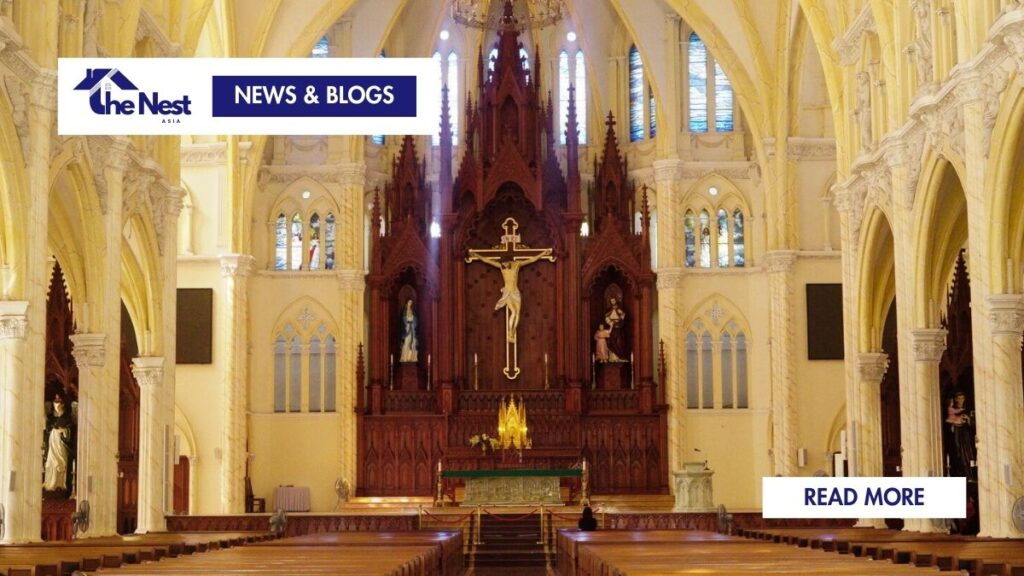
For many believers, Christianity in Vietnam isn’t separate from culture — it’s integrated into daily life through acts of service, charity, and togetherness. Here, faith is not just worship in church; it is lived through kindness, community, and care for one another — the very essence of Vietnamese values.
Read Related: Politeness in Vietnam Culture and Tradition: Why “Maybe” Often Means “No”
Islam in Vietnam – The Quiet Faith of the Cham People
Within the diverse landscape of Vietnam religion, Islam in Vietnam represents one of the smallest yet most enduring faiths. Introduced by traders from the Malay Archipelago and India between the 10th and 11th centuries, Islam took root primarily among the Cham ethnic communities in the southern provinces of An Giang, Ninh Thuận, and Bình Thuận, and later in Ho Chi Minh City.
Today, there are approximately 80,000–100,000 Muslims in Vietnam, forming a close-knit community united by discipline, devotion, and hospitality. Their daily life revolves around the five pillars of Islam — prayer, fasting, charity, faith, and pilgrimage — all practiced with a sense of quiet dignity that blends with broader Vietnamese values of harmony and respect.
Halal dietary laws are strictly observed: no pork, no alcohol, and all meat must be prepared according to Islamic tradition. During Ramadan, families and friends gather to break fast together at sunset, reflecting the spirit of compassion and togetherness that defines both Islam and Vietnamese culture.
Visitors can experience this living faith at mosques across the country, such as the Jamiul Islamiyah Mosque near Bến Thành Market in Ho Chi Minh City, Al-Noor Mosque in Hanoi’s Old Quarter, or Masjid Al Rahman in Da Nang. Each serves not only as a place of worship but also as a bridge between Muslims in Vietnam and the wider community.
Though a minority, followers of Islam in Vietnam contribute to the country’s shared identity of tolerance and cultural coexistence — proving once again that Vietnam religion is not about difference, but about unity in diversity.
Read Related: Why Titles Matter So Much and Why Vietnamese Names Don’t Work Like Western Ones?
Confucianism in Vietnam – The Moral Compass
Among the philosophies shaping Vietnam religion, none has guided social behavior more deeply than Confucianism in Vietnam. Introduced from China nearly two millennia ago, Confucianism took firm root during the imperial dynasties, especially under the Nguyễn rulers in Huế. While Buddhism in Vietnam taught compassion and inner peace, Confucianism provided a framework for moral order — a code for how people should live, learn, and lead.
At its heart lies the belief that harmony in the nation begins with harmony in the family. Ancestor worship, filial piety, loyalty, and respect form the pillars of Vietnamese values still visible today. From the emperor, seen as the “Son of Heaven,” to the common farmer, everyone’s duty was to act according to moral virtue, ensuring balance between Heaven, Earth, and humanity. Even emperors like Tu Duc, facing national crises, interpreted disasters as signs of Heaven’s displeasure — proof that faith and governance were inseparable.
Education was the path to virtue and power. Through rigorous civil service examinations, candidates were tested on classical Confucian texts — not just for knowledge, but for moral integrity. The Temple of Literature (Văn Miếu – Quốc Tử Giám) in Hanoi still stands as a testament to this tradition, where generations of scholars once prayed for wisdom and success.

Though often seen as philosophy more than faith, Confucianism in Vietnam holds a quiet spiritual depth. It reflects beliefs in Vietnam that virtue itself is sacred — that the way one treats others, honors ancestors, and fulfills duty is an act of worship. In essence, it anchors the moral backbone of Vietnam religion, turning everyday conduct into a reflection of cosmic balance.
Folk Religions and Vietnamese Gods
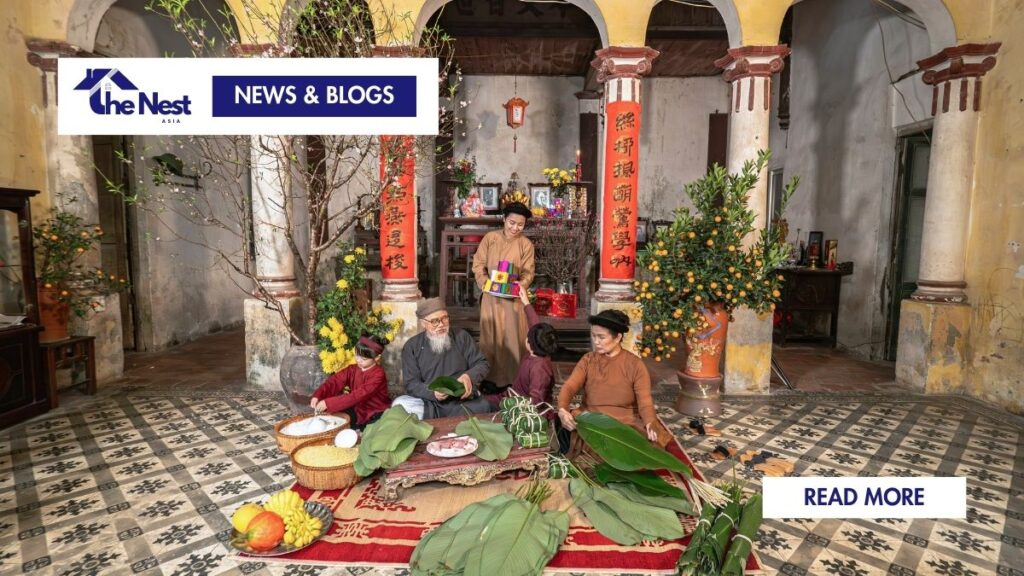
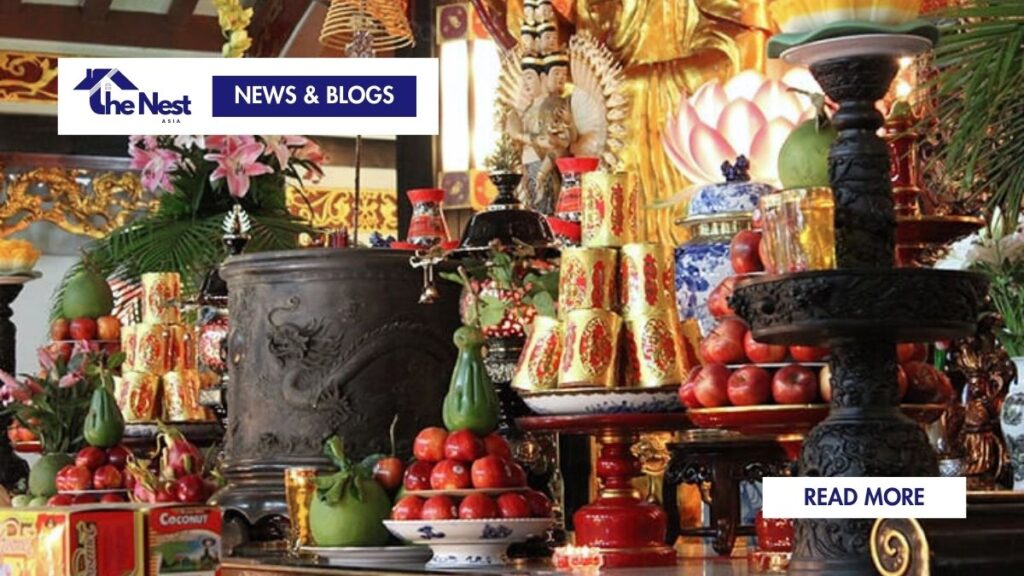
Beyond temples, churches, and mosques, the truest expression of Vietnam religion lives in homes — on family altars filled with fruit, incense, and soft candlelight. This is where folk beliefs in Vietnam come to life, blending ancient animism, ancestor worship, and nature reverence into everyday rituals.
At the heart of these traditions is the conviction that the visible and invisible worlds coexist. Families make daily offerings to honour ancestors, believing that the spirits of loved ones continue to protect and bless the living. Across the country, you’ll find homes displaying images of Vietnamese gods such as Thần Tài (God of Wealth), Ông Địa (God of the Earth), or Mẫu Liễu Hạnh, the Mother Goddess of compassion and fertility. These deities represent not abstract divinity, but human virtues — prosperity, kindness, and protection — the same core of Vietnamese values passed down for generations.
Festivals like Tết (Lunar New Year), Vu Lan (Ghost Festival), and Lễ Hội Đền Hùng (Hung Kings Festival) embody these beliefs in Vietnam: that gratitude sustains harmony between the living and the dead. Folk religion doesn’t separate sacred from daily life — cooking, praying, or tending the family altar are all acts of devotion.
Read Related: Top Festival in Vietnam: Mid Autumn Festival, Tet Festival, and Vietnam Public Holidays
Hoa Hao Buddhism – Faith in Simplicity and Social Virtue
Within the mosaic of Vietnam religion, Hoa Hao Buddhism stands out as a reformist and deeply moral faith. Founded in 1939 by Huỳnh Phú Sổ in the Mekong Delta, Hoa Hao sought to restore Buddhism to its original simplicity — moving away from expensive rituals toward daily virtue and mindful living.
Huỳnh Phú Sổ emphasised that religion should guide action, not remain confined to temples. Followers were encouraged to practice honesty, humility, and compassion in daily life — a reflection of enduring Vietnamese values. Unlike traditional sects, Hoa Hao worship is often conducted at home rather than in elaborate pagodas, focusing on sincerity over ceremony.
Even today, beliefs in Vietnam shaped by the Hoa Hao faith continue to inspire community spirit and moral conduct. It represents the idea that spiritual enlightenment is achieved through service, simplicity, and a heart aligned with righteousness.
Caodaism – Harmony in Diversity
If Hoa Hao reflects purity and reform, Caodaism embodies inclusion and universality within Vietnam religion. Established in 1926 in Tây Ninh, Caodaism weaves together elements of Buddhism, Confucianism, Taoism, Christianity, and Vietnamese folk beliefs into one spiritual system that seeks unity among all religions.
Its followers worship Cao Đài, the “Supreme Being,” symbolized by the Heavenly Eye that represents divine wisdom watching over humanity. The Cao Đài Holy See — an architectural marvel blending Western cathedral structure with vibrant Eastern motifs — captures this syncretic spirit perfectly.
Caodaism honors both Vietnamese gods and global spiritual figures like Buddha, Confucius, Jesus, and Victor Hugo, illustrating the openness and adaptability of beliefs in Vietnam. For many, it embodies Vietnamese values of tolerance, harmony, and coexistence — a faith that sees no contradiction between East and West, tradition and modernity.
Conclusion
From pagodas and churches to family altars and street shrines, Vietnam religion is more than a belief system — it’s the soul of a nation built on compassion, harmony, and respect. Each faith, whether ancient or modern, local or global, contributes to the tapestry of Vietnamese values that define daily life: gratitude to ancestors, kindness to others, and balance with nature.
For visitors, expats, and investors alike, understanding these beliefs in Vietnam is the key to truly connecting — not just with places, but with people. Because in Vietnam, spirituality isn’t found in isolation; it lives in conversation, community, and the quiet grace of everyday acts.
About Us
The Nest Asia is a one-stop resource offering comprehensive information, practical relocation advice, cultural insights, valuable connections, and trusted services to help expatriates living in Vietnam navigate the transition, overcome challenges, and build a fulfilling life abroad. Starting your journey in a new country can often feel overwhelming. The Nest Asia is your trusted partner – we’re here to simplify that process and ultimately make Vietnam feel like home for you and your loved ones.
Discover more insightful blogs from The Nest Asia here!
Schedule a Meeting
Disclaimer: The Nest Asia is not an authorized provider of official government or non-government services. The information provided is intended for general guidance only. While we strive to offer accurate and timely information, we make no representations or warranties regarding its completeness or accuracy.