Are global supply chains ready for continued volatility in 2026? The China Plus One Strategy has become a critical approach to supply chain diversification as businesses reduce reliance on a single manufacturing hub.
Let’s explore why the strategy still matters in 2026 and how manufacturing alternatives like Vietnam help manage global trade risks.
What is the China Plus One Strategy?
Definition
The China Plus One Strategy is a business approach that reduces dependence on a single manufacturing country, in this case, China, by adding at least one alternative production location.
Instead of relocating completely, companies keep China as a core hub while expanding into other markets. The goal is simple: lower risk without losing efficiency.
How It Works in Practice?
Most companies apply China Plus One through a dual-hub model:
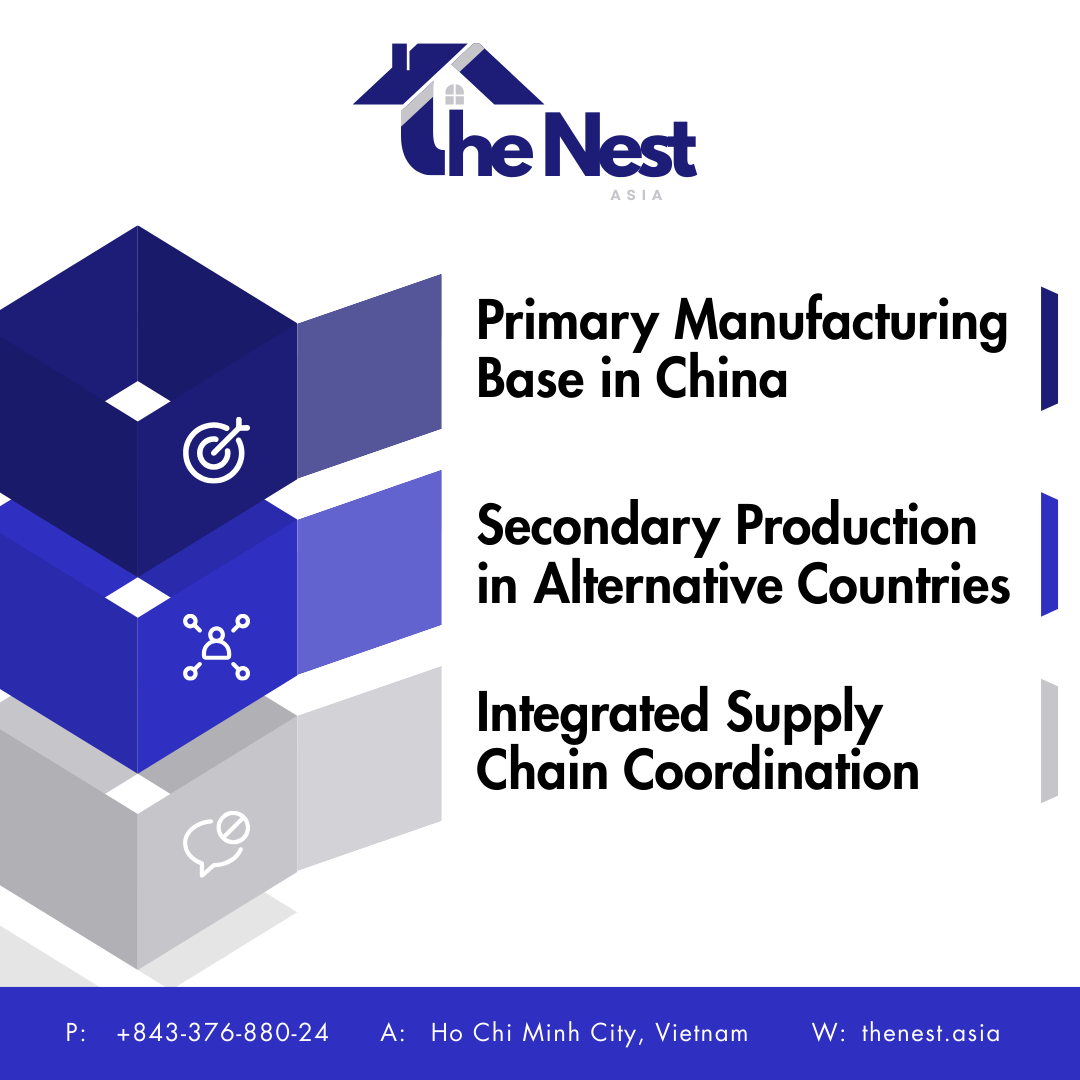
China Plus One strategy diagram with China as the primary manufacturing base and secondary production in alternative countries.
- Companies retain operations in China to leverage its mature infrastructure, supplier networks, and domestic market access.
- Manufacturing or assembly is added in countries such as Vietnam, India, or Mexico to reduce single-country dependency.
- Businesses adopt dual sourcing and flexible logistics routes to improve resilience and response speed.
This structure allows businesses to respond faster to disruptions without rebuilding their entire supply chain.
China Plus One vs Full China Exit
China Plus One focuses on risk diversification rather than relocation. Unlike a full exit strategy, companies continue to benefit from China’s industrial scale while reducing exposure to tariffs, regulatory changes, and regional disruptions. The result is a more balanced and resilient supply chain structure.
Why the China Plus One Strategy Emerged?
Rising Manufacturing Costs in China
Over the past decade, manufacturing costs in China have increased significantly due to wage growth, stricter labor regulations, and higher environmental compliance requirements. As a result, labor-intensive industries began exploring more cost-efficient manufacturing alternatives across Asia.
Trade Wars and Geopolitical Risks
Ongoing trade tensions, particularly between major economies, have introduced long-term uncertainty into global trade. Tariffs, export controls, and shifting trade policies have made reliance on a single production base increasingly risky for international businesses.
Supply Chain Disruptions Since 2020
Global supply chain disruptions since 2020 exposed the vulnerability of centralized manufacturing models. Factory shutdowns, shipping delays, and logistics bottlenecks highlighted the importance of geographic diversification and proactive risk management.
Why China Plus One Still Matters in 2026?
Global Trade Remains Uncertain
In 2026, global trade continues to face uncertainty driven by geopolitical realignments, regulatory fragmentation, and regionalized supply chains. As a result, the China Plus One Strategy has evolved from a cost-saving tactic into a long-term resilience framework.
In addition, businesses now face overlapping risks rather than isolated disruptions. Geopolitical tension, regulatory changes, and logistics constraints often occur simultaneously, making traditional supply chain models harder to manage without diversification.
China Remains Important – But No Longer Sufficient
China remains a global leader in advanced manufacturing sectors. However, rising labor constraints and demographic challenges mean that relying solely on China is no longer sufficient, particularly for SMEs seeking scalable growth.
For many SMEs, maintaining flexibility across multiple countries is becoming a competitive advantage rather than a contingency plan.
Investor and Buyer Pressure for Resilience
Investors and international buyers increasingly demand transparency in sourcing, labor standards, and environmental impact. A diversified manufacturing footprint enables companies to meet ESG expectations while maintaining operational stability.
Key Countries Benefiting From the China Plus One Strategy
Different countries benefit from the China Plus One Strategy in different ways, depending on cost structure, market access, and regional trade integration.
| Country | Primary Advantages | Top Industries |
| Vietnam | Proximity to China, strong FTAs, and political stability | Electronics, textiles, and AI devices |
| India | Large domestic market, skilled workforce | Semiconductors, smartphones, and pharmaceuticals |
| Mexico | Nearshoring to North America, USMCA Access | Automotive, machinery, and consumer goods |
While each destination offers distinct advantages, Vietnam stands out for companies seeking proximity to China combined with strong trade agreement coverage.
Read More: Vietnam Manufacturing Hub: Why China+1 Makes 2026 the Turning Point?
Challenges & Risks of China Plus One
- Infrastructure Gaps: Infrastructure quality can vary significantly between regions, affecting logistics speed and cost predictability.
- Talent Shortages: In some markets, skilled technical labor may be limited, requiring additional training or management investment.
- Regulatory Complexity: Differences in legal frameworks, tax systems, and compliance standards can slow down implementation without local expertise.
How Companies Can Implement a China Plus One Strategy?
Successful implementation requires careful planning, local insight, and a phased approach rather than rapid relocation.
Step 1- Supply Chain Risk Assessment
Identify risks related to supplier concentration, logistics dependency, and regulatory exposure.
Step 2- Country And Industry Fit Analysis
Evaluate alternative manufacturing locations based on infrastructure quality, labor availability, political stability, and trade agreements.
Step 3 – Partner And Supplier Selection
Select reliable local partners, logistics providers, and legal advisors to support market entry and operations.
Step 4 – Gradual Production Diversification
Shift your production in phases to maintain quality control and operational continuity.
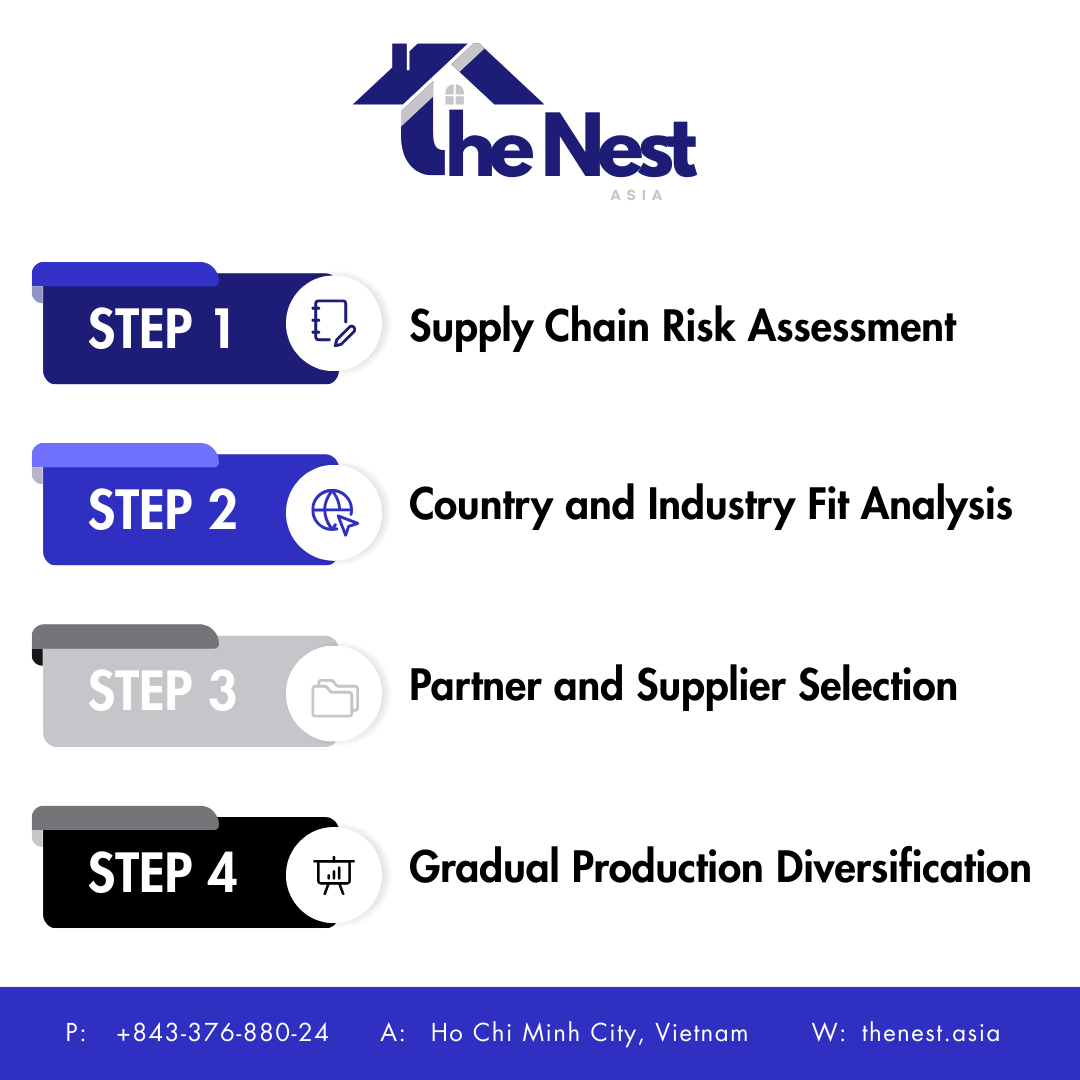
China Plus One implementation steps from risk assessment to gradual production diversification.
Companies that move gradually are more likely to maintain product quality, supplier reliability, and cost control during the transition.
China Plus One is Still a Smart Strategy in 2026
The China Plus One Strategy in 2026 is no longer about leaving China, but about building a resilient, multipolar network.
By diversifying into hubs like Vietnam, businesses can protect themselves from geopolitical shifts while capitalizing on the growth of emerging markets.
As global trade continues to evolve, companies that invest early in diversified, flexible supply chains will be better positioned to adapt and grow beyond 2026.
About Us
The Nest Asia is a one-stop resource offering comprehensive information, practical relocation advice, cultural insights, valuable connections, and trusted services to help expatriates living in Vietnam navigate the transition, overcome challenges, and build a fulfilling life abroad. Starting your journey in a new country can often feel overwhelming. The Nest Asia is your trusted partner – we’re here to simplify that process and ultimately make Vietnam feel like home for you and your loved ones.
Discover more insightful blogs from The Nest Asia here!
Schedule a Meeting
Disclaimer: The Nest Asia is not an authorized provider of official government or non-government services. The information provided is intended for general guidance only. While we strive to offer accurate and timely information, we make no representations or warranties regarding its completeness or accuracy.